
What Is Almost Dead Is Still Very Much Dead
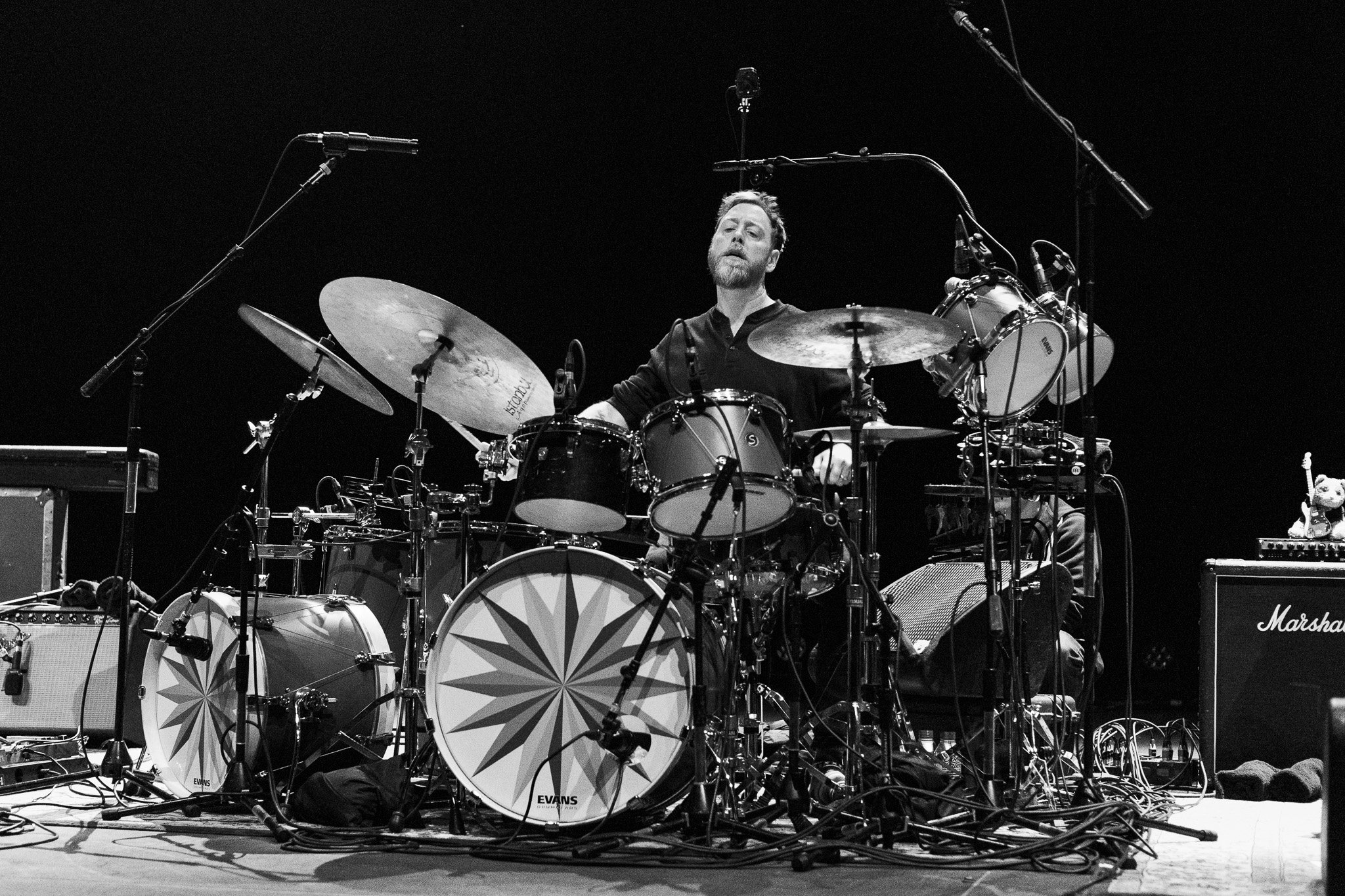
Joe Russo performing with Joe Russo’s Almost Dead at The Anthem in Washington, DC. Photographs by Jonathan Nevius.
A Cliche like that surely invokes the worn out debate on whether the things we love may come back to life. No, instead I am suggesting our comfort driven tendencies; that nothing really dies because it is repackaged with marginal improvement. Whether that fits the historical notion of reincarnation or not is up to you, but it is a cycle that captures our current zeitgeist fairly well.
Consider Wicked: For Good, the sequel to its blockbuster namesake, descended the silver screen with a resounding yawn from critics despite having a strong opening weekend at the box office. The opinions of the elite critics are damned. People not only pay to go see Wicked: For Good, they pay so that they can say that they saw Wicked: For Good. It doesn’t matter anymore that the new iPhone is, at best, only 25% better than the one in your pocket. That doesn’t stop record breaking sales, year over year. Maybe it’s the fear of missing out, or maybe it’s our human bias for nostalgia. Or maybe it’s a feeling that creativity is not worth the extra effort. Whatever you may judge, there is no doubt that monotony has a sovereign grip over the culture.
And that brings me to a cold night in November that brought me to see Joe Russo’s Almost Dead, a Brooklyn-based outfit led by drummer Joe Russo. A former protege from Furthur, a band composed of living members of the Grateful Dead, you are right this is a review of a cover band that plans, you guessed it, Dead music. But don’t let the name fool you, Russo & Company are well educated in the songbook of the early Rock era.
The show’s format is a standard issue for the Jam Band scene; two sets, encore, house lights come on and you are out the door before midnight. Concert-going is so much so a predictable endeavor these days that I can reliably determine how much time is left for a song. Tried and true Deadheads know that this is not like the storied days of the late 60’s drug-infused all night playing included three, sometimes four sets. Even the Beatles played all night in Hamburg. That’s what you did, and audiences wanted it. At least today we might be getting better sleep scores.
I stood center left of the stage, a great spot to witness an audience shedding their winter coats to reveal their true colors. Adjacent to me is a large and growing circle of what appeared to be people born during the Clinton presidency dawned in hemp-infused t-shirts. The circle they reserved was not for some kind of pre-show frisbee. Thankfully, not a drum circle either. It wasn’t until the first note that I realized this space was to dance. And not just do a shuffle. Before I knew it they became more akin to a black hole, consuming space within it, pulling others into their affectionate orbit.
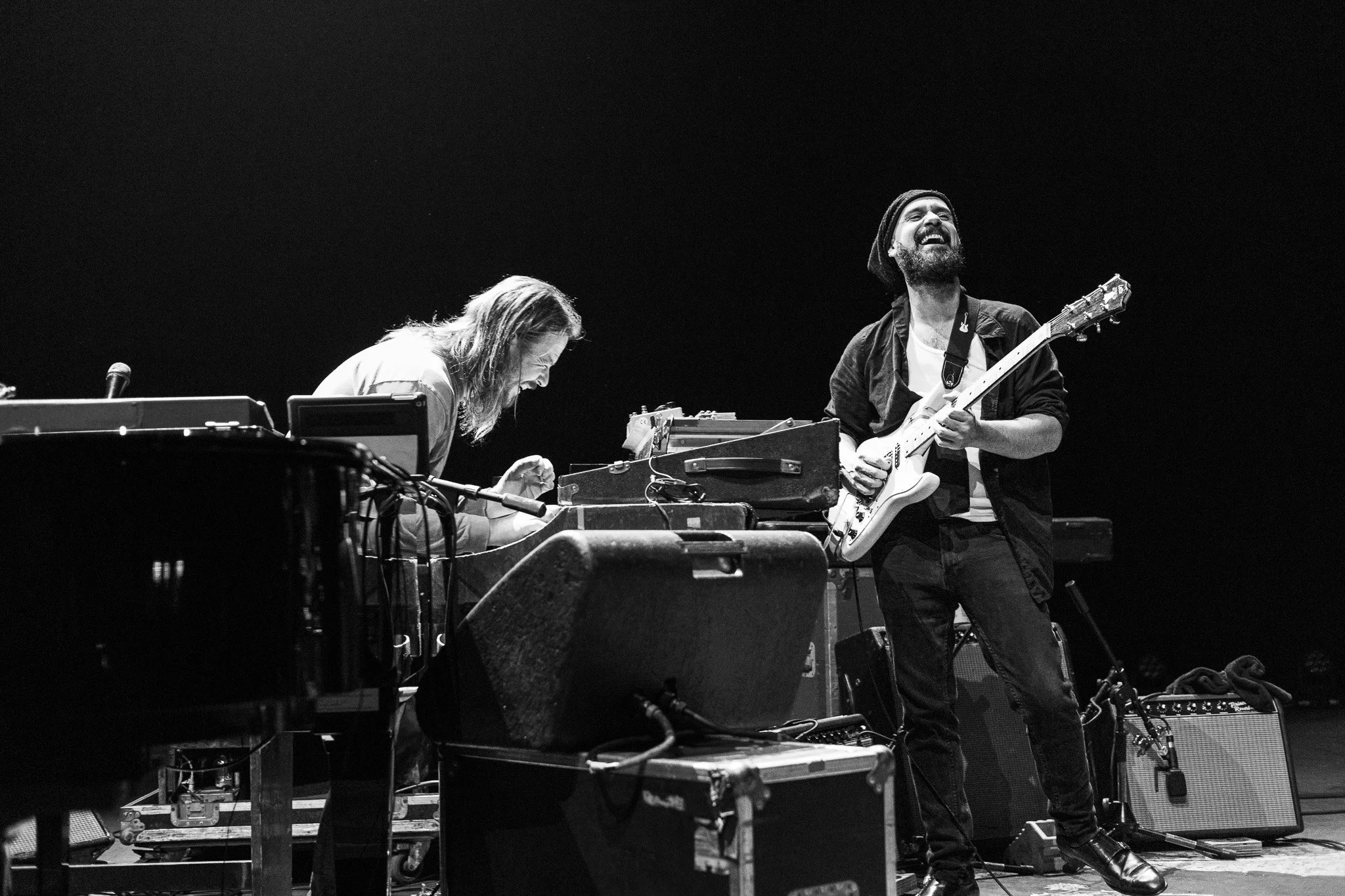
Marco Benevento and Tom Hamilton performing with Joe Russo’s Almost Dead at The Anthem in Washington, DC. Photographs by Jonathan Nevius.
From the first set, we had all of the trappings of a Jam-band revival. Filled with Dead anthems such as “Loser” and “Fire on the Mountain,” we were given much-needed texture with cowboy country classic “Mama Tried” and Bob Dylan’s “Silvio” (which, for the uninitiated, was also co-written by Dead songwriter Robert Hunter). The saying goes that no two Dead-esque shows are alike. Song choices on a jam band set list are, for the kids, like opening a Pop Mart box. You have no idea what you are going to get.
Nothing personifies that spontaneity better than the garage-rock-inspired rendition of Woody Guthrie’s “All You Fascists”. It was a sonic breath of fresh air to hear an almost Strokes-esque groove give new flight to songwriting that might, just might, have been older than anyone else in the audience. Many know Guthrie’s iconic machine that killed fascists. I’m not so sure what he would think of an entire band, maybe that it was an appropriate response given the current state affairs.
The set break is an under-appreciated feature of the scene that fits well into our new affinity for work life balance. I decided that an aerial view should be secured for the second set. I needed some elbow space. A well known plus of the Anthem as a venue is the variety of vantage points you can get for a GA ticket. As recent as the 60th Anniversary of the Grateful Dead in Golden Gate Park, you had to stand in your spot for hours on end if you wanted any chance of actually seeing the band. Modernity in moments like this does have its perks.
The second set included a heavier wave of Dead staples, including a Estimated Prophet that segued into a lively “I Know You Rider,” complimented by the mid-80’s social-political consciousness that is “Throwing Stones”. The energy you could see from up top was vibrant. My old space I held down on the front left was now fully absorbed by the circle of dancers. More elbow room for them too, I suppose.
Then I came to realize that no one around me had their phone out. And no one below me seemed to as well.
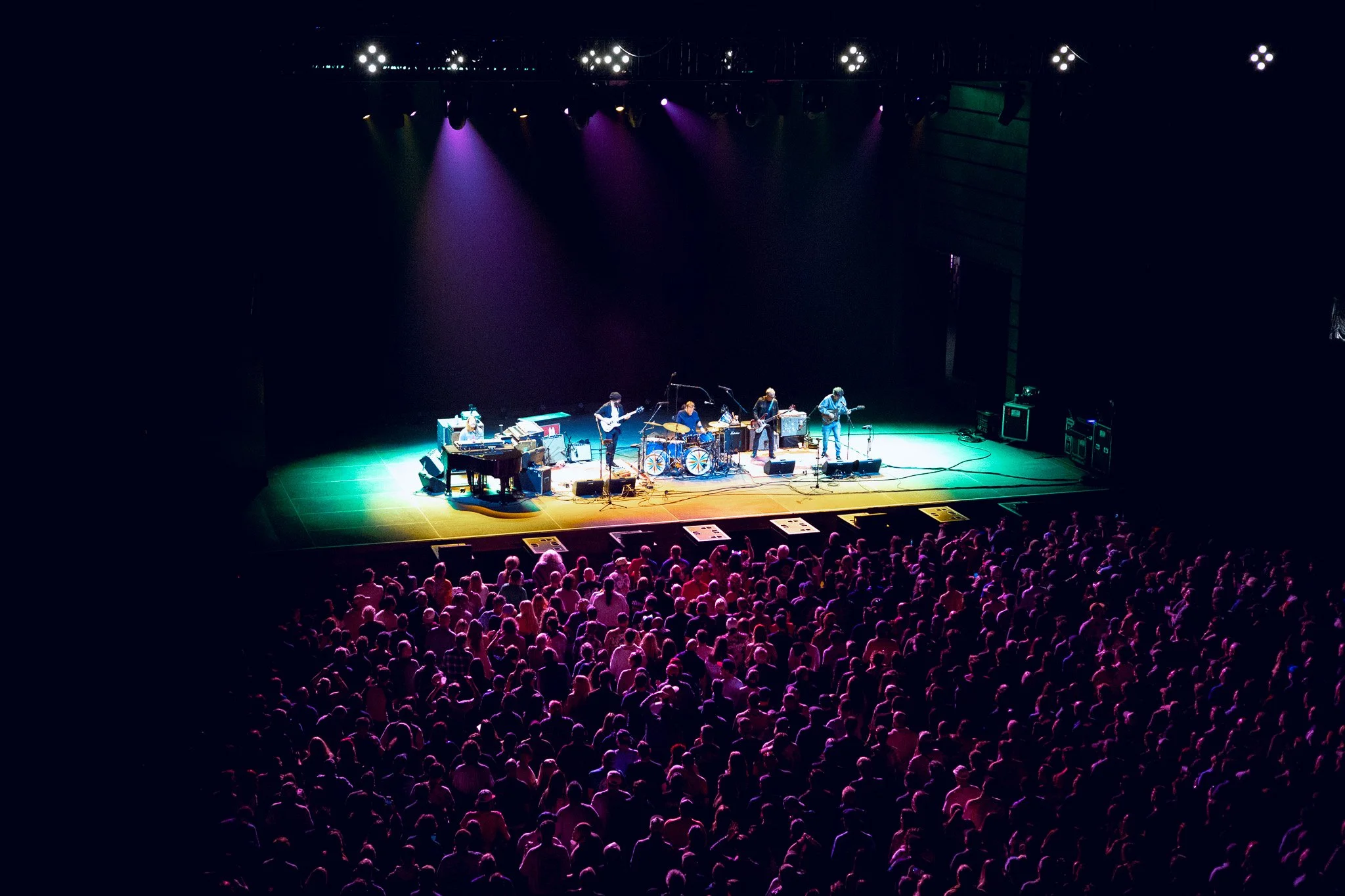
Joe Russo’s Almost Dead at The Anthem in Washington, DC. Photographs by Jonathan Nevius.
The current concertgoing experience is similar to being in a sea of cinematographers. Our social media world drives us to watch a show through 4 inches of glass rather than the all-encompassing view our senses provide us for those lucky to have all of our faculties. Somehow we walk away from this reaction a little hollow. Too busy recording the moment to understand the moment, let alone be in it. This recent invention helps keep every concert-going experience as, well, the same.
The Grateful Dead were infamous for allowing anyone to record their live act. The practice of trading tapes, comparing shows, it was a deep tradition that encouraged everyone to lean into the music. There were no prerequisites, and opinions were free and cheap. But the shared moment encouraged you to be present. I’d call this, the original fear of missing out.
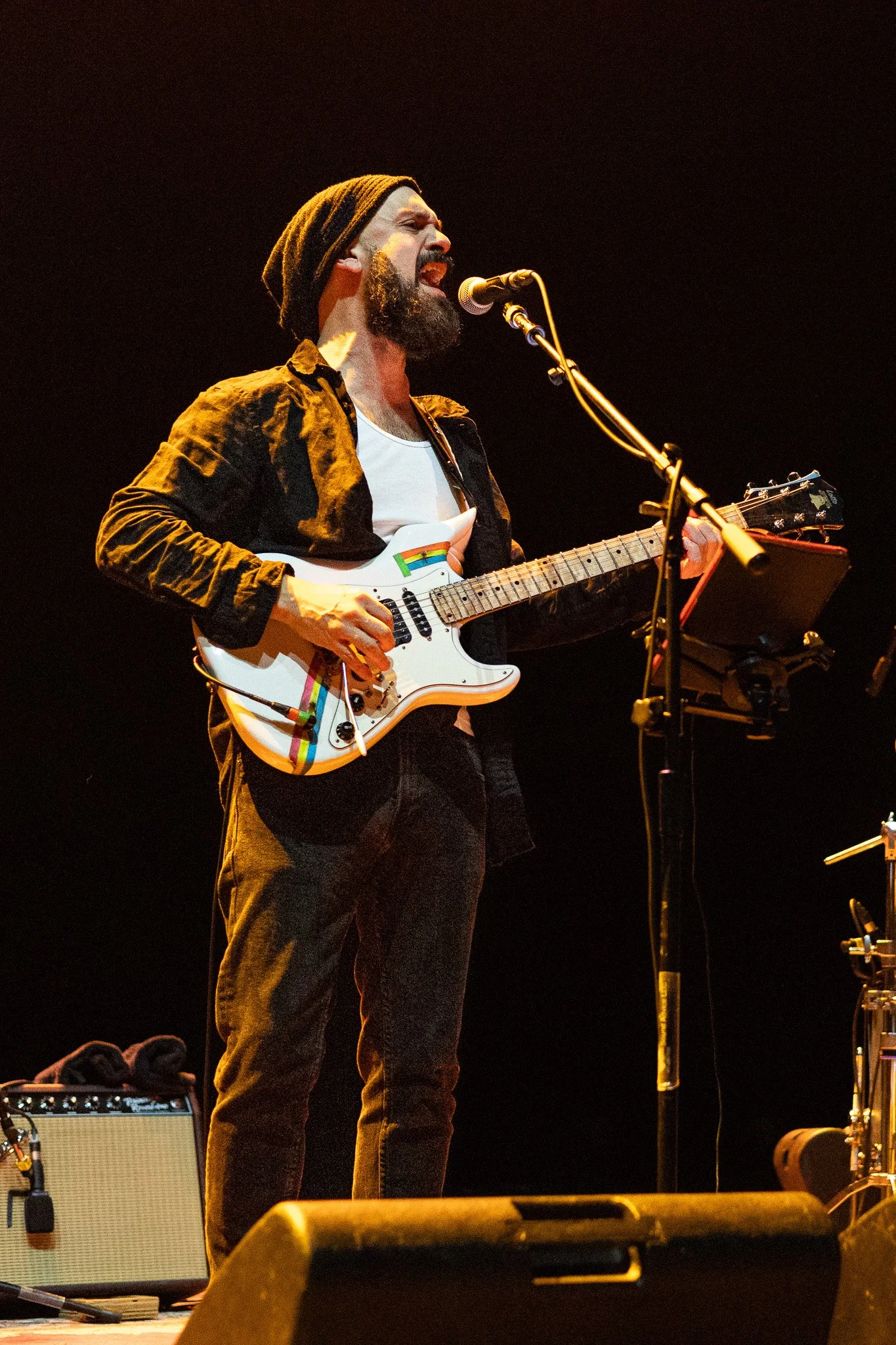
Tom Hamilton performing with Joe Russo’s Almost Dead at The Anthem in Washington, DC. Photographs by Jonathan Nevius.
The real intrigue is where a show like this fits into today’s cultural landscape. The mere mention of a cover band, let alone a Grateful Dead cover band, conveys a return to musical Camelot. “Greatest Hits” of the fourth degree. And bands know this. The Music Industry knows this. There is money to be made in selling nostalgia; something you’ve seen before that you will pay to see again. And I’ve been to over 30 Dead-adjacent shows across my lifetime. I typically know what I’m getting.
Rather, the space that Joe Russo’s Almost Dead occupies is more than the covers they play. It’s the way the music challenges you to be present. This rich tradition evokes feelings of being in the middle of a sonic journey; the sense that with every twist and trade off between the musicians on stage, you could be transported to an entirely new setting. To the uninitiated, that is the “jam” that makes Jam Bands, well, Jam.
There’s something that Russo’s outfit does that keeps me coming back for more. They remind us of the importance of being present in the moment. They are a cover band in the sense that they play the songbook of The Grateful Dead. But that songbook requires you to listen, to lean in. It also allows for creativity; originality and spontaneity. It provides a vehicle that is constantly expanding terrain, pushing the belief of what is possible. It’s the spirit of adventure, the allure of danger, a reminder of every moment as shared. Trying to describe it with just words, well, it would blow off your ears. You’ll need those for the next show.
What is Dead is still Dead, there is no denying that. Looking out upon the Almost Dead, you can’t help to think to yourself how alive this room feels, and what a blessing it is to break up the monotony.